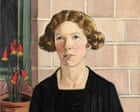
Margaret Preston: Australia’s mostbeloved and contested artist?
The Ian Potter Centre: NGV Australia has staged the first Preston retrospective in 20 years, exploring what was gained and flattened in her quest to create a singular Australian aesthetic
This story summarizes reporting from The Guardian. Read the original for full context. Wire items stay in our news sitemap for seven days. Editorial policy.
Oliver Giles3 Sept 2026, 03:00 pmUpdated 3h ago2 min readAsiaAustralia
Australia — Oliver Giles
Margaret Preston: Australia’s most beloved and contested artist?
The Ian Potter Centre: NGV Australia has staged the first Preston retrospective in 20 years, exploring what was gained and flattened in her quest to create a singular Australian aesthetic
Hanging at the entrance of the new Margaret Preston exhibition at the National Gallery of Victoria are three of her instantly recognisable still lifes. Each depicts a vase brimming with native flora: bell-shaped gumnuts, silvery eucalyptus leaves and bristly banksias. These are identifiably Australian plants, painted in what might be described as an Australian style, reflecting Preston’s lifelong ambition to define a national aesthetic. Look more closely, though, and this simplistic story begins to unravel.
Her 1928 painting Western Australian Gum Blossom features a blocky background of creamy rectangles that gesture to the modernist and abstract movements that were flourishing in Europe at the time, as well as the flattened forms of Japanese woodblock prints. The black and white geometry of the second work, Native Honeysuckle, echoes cubist paintings by the French artist Fernand Léger. And all three point to Preston’s interest in Indigeneity, a fascination intertwined with her appreciation and appropriation of Aboriginal art.
Hanging at the entrance of the new Margaret Preston exhibition at the National Gallery of Victoria are three of her instantly recognisable still lifes. Each depicts a vase brimming with native flora: bell-shaped gumnuts, silvery eucalyptus leaves and bristly banksias. These are identifiably Australian plants, painted in what might be described as an Australian style, reflecting Preston’s lifelong ambition to define a national aesthetic. Look more closely, though, and this simplistic story begins to unravel.
This report is published with credit to The Guardian. Full available text from the wire is above. Read on The Guardian →
Source: The Guardian · Oliver Giles. Published 3 Sept 2026, 03:00 pm.