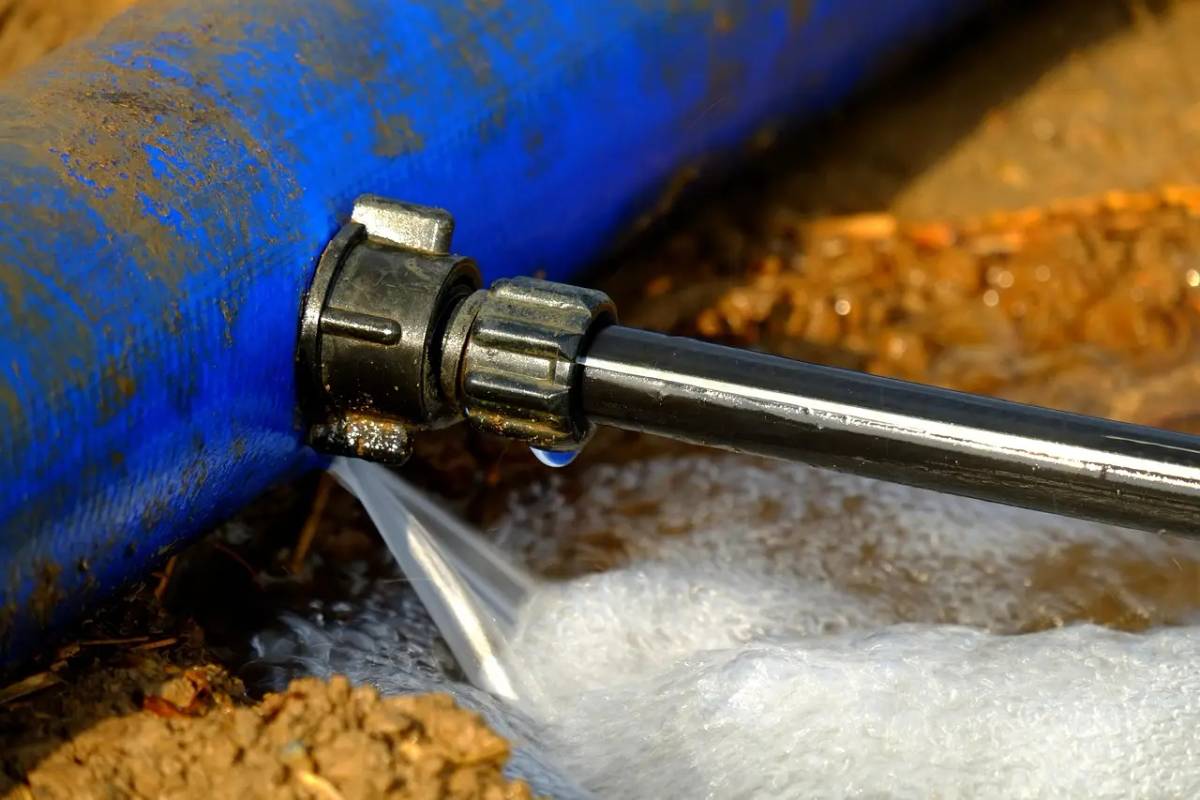
A speeding car crashed into a critical water pipeline air valve near Nagole Metro Station, resulting in the death of a 24-year-old man and causing significant water loss. The Hyderabad Metropolitan Water Supply and Sewerage Board (HMWSSB) completed emergency repairs within five hours to restore drinking water to the city.
What actually happened
On Tuesday, October 20, 2026, a car collided with the iron fencing protecting an air-release valve on the Krishna Phase-2 pipeline.
The accident occurred around 4 a.m. near Metro Pillar Nos. 813 and 814 on the Uppal-Nagole route.
The force of the impact destroyed the valve, causing a massive jet of water to erupt more than 20 feet into the air.
This caused flooding on nearby roads and led to severe traffic congestion during the early hours of the morning.
The deceased was identified as Vineeth, a resident of Hayathnagar.
Police and fire services personnel rushed to the site immediately following the collision to manage the scene and the resulting water flow.
Why it matters
The incident caused a major disruption to the city's drinking water infrastructure during a festival period.
Thousands of litres of water were lost, and residents across many localities faced an immediate shortage of supply.
Those affected by the temporary disruption included:
- Residents of BN Reddy Nagar, Uppal, and Vanasthalipuram
- Households in Ramanthapur, Beerappagadda, and Autonagar
- Communities in Prakash Nagar, Begumpet, and Padmaraonagar
- Areas in Secunderabad, Cantonment, Lalaguda, and Addagutta
- Residents in Nallagutta, Mettuguda, Vaishalinagar, Meerpet, Balapur, and Marredpally
Water is a finite resource, and the loss of thousands of litres impacts the city's ability to maintain pressure in the lines.
With the city already dealing with water scarcity attributed to El Nino, such infrastructure failures exacerbate the challenges faced by residents.
How we got here
The Krishna Drinking Water Supply Scheme Phase-2 is a vital component of Hyderabad's water network.
The air-release valve system is designed to maintain pressure and safety within the pipeline, and it is protected by iron fencing located near the main road.
Following the crash, HMWSSB transmission officials responded by stopping the relevant pumps to control the flow of water.
Managing Director K. Ashok Reddy ordered immediate repairs, coordinating teams from transmission, operations, and maintenance departments to address the damage.
Technical teams had to mobilize necessary machinery and equipment to the site.
They worked continuously to minimize the disruption, ensuring that the repair work was completed in record time despite the festival season.
What happens next
While the immediate water supply has been restored, the infrastructure at the site may require long-term monitoring to ensure full stability.
The following steps are typical in such incidents:
- Authorities may conduct a formal assessment of the damaged protective fencing and valve structure.
- Police investigations into the circumstances of the fatal car crash will likely continue.
- The HMWSSB may review safety measures around critical pipeline infrastructure near busy roads to prevent future accidents.
Residents were previously advised to use water sparingly until normal supply was restored.
The Water Board had also indicated that tankers would be deployed wherever necessary to bridge the gap during the outage.
Key facts at a glance
- The accident took place at approximately 4 a.m.
- The deceased was identified as a 24-year-old resident of Hayathnagar.
- Water erupted more than 20 feet into the air after the valve was struck.
- Repair teams restored the pipeline and water supply within five hours.
- The damaged valve was located about 20 feet from the main road.
Read the news report this explainer is based on: Man killed as car crashes into Krishna water pipeline near Nagole Metro Station; supply restored after five-hour repair.
Source: Ebenezer News Explainer Desk · Ebenezer News Explainer Desk. Published 20 Oct 2026, 11:45 am.