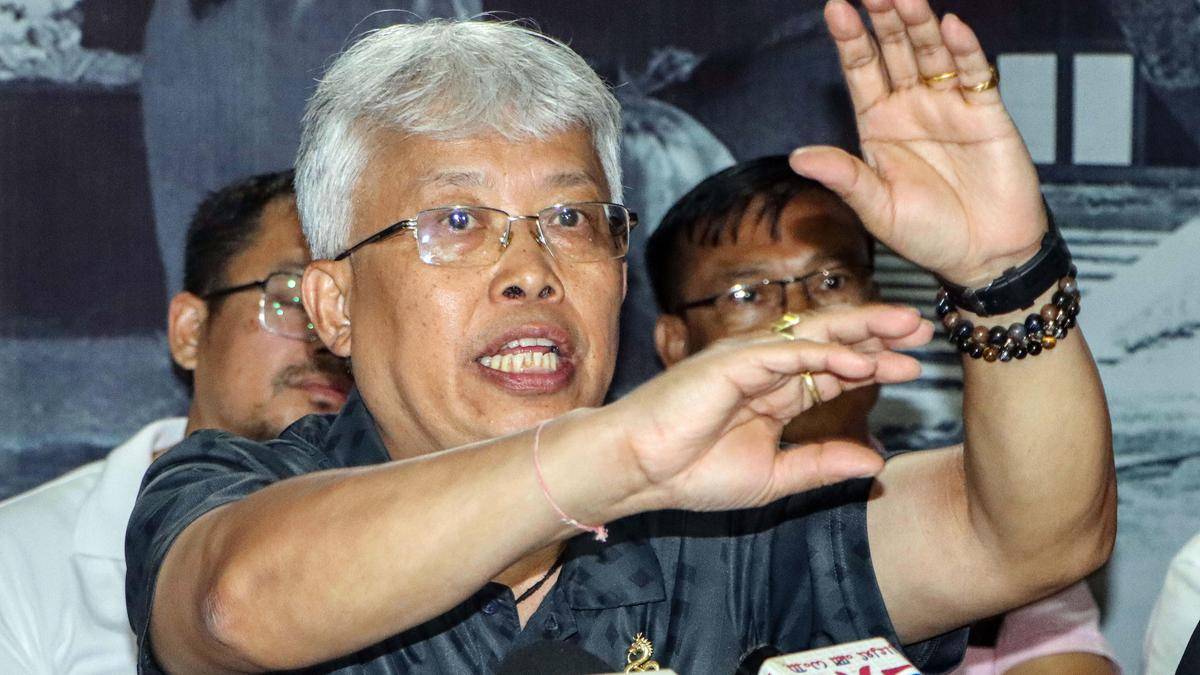
Former Chief Minister Edappadi K. Palaniswami has criticised the TVK-led Tamil Nadu government for allegedly purchasing electricity from private players at a high rate of ₹37 per unit. He has urged the administration to cancel the agreement, citing significantly lower rates in other states.
Concerns over power procurement
AIADMK general secretary Edappadi K. Palaniswami has publicly questioned the state government regarding its electricity purchase policies.
He alleges that the current administration is paying an exorbitant rate for power sourced from private providers.
According to the former Chief Minister, this specific rate is the highest ever recorded for such purchases by the state.
He has expressed strong disapproval of the deal, suggesting it appears to favour private interests over public financial responsibility.
The former Chief Minister specifically targeted the leadership of Tamil Nadu Chief Minister C. Joseph Vijay.
He argues that the current procurement strategy is unsustainable and potentially damaging to the state's financial health.
Why the issue matters
This dispute highlights the ongoing debate over how state governments manage energy resources and public funds.
When electricity costs rise, the financial impact often filters down to the state budget and, eventually, the public.
Energy procurement is a vital function of state governance.
It ensures that homes, businesses, and essential services receive a steady supply of power to function daily.
- The state government, which manages public electricity distribution and policy.
- Private power players who are party to the purchase agreements.
- The AIADMK opposition party, which is monitoring government expenditure.
- Taxpayers who fund state-led initiatives and infrastructure projects.
Background of the dispute
Electricity procurement is a complex process where state agencies enter into agreements with private companies to bridge gaps between demand and supply.
These contracts are typically subject to scrutiny regarding transparency and the fairness of the pricing.
Mr. Palaniswami pointed to comparisons with other states to support his criticism.
He noted that the Andhra Pradesh government reportedly signed an agreement on September 9 to purchase electricity at a significantly lower range of ₹16-20 per unit.
He further charged that no other state has signed an agreement at a rate between ₹32-37 per unit like Tamil Nadu.
This comparison serves as the basis for his demand that the current deal be dropped immediately.
What happens next
In political and administrative disputes of this nature, the government typically reviews the concerns raised by the opposition.
Officials may choose to release further details or clarify the terms of the contract to address public criticism.
Often, such disagreements lead to increased public discourse.
The government may be required to provide a justification for the premium pricing compared to other states.
- The state government could issue a formal response regarding the contract terms.
- Opposition leaders may continue to demand the cancellation of the current agreement.
- Independent audits or regulatory reviews might be requested to examine the procurement process.
Future steps depend on the government's willingness to engage with these criticisms.
If the pressure from the opposition grows, the administration might be forced to re-evaluate its current power purchase agreements.
Key facts at a glance
- The criticism was raised by AIADMK general secretary Edappadi K. Palaniswami.
- The Tamil Nadu government is currently led by Chief Minister C. Joseph Vijay.
- The disputed electricity purchase rate is reported to be ₹37 per unit.
- Andhra Pradesh reportedly signed a power agreement on September 9.
- The reported rate in Andhra Pradesh is between ₹16-20 per unit.
Read the news report this explainer is based on: Edappadi Palaniswami criticises TVK-led Tamil Nadu government over electricity purchase at high rate.
Source: Ebenezer News Explainer Desk · Ebenezer News Explainer Desk. Published 13 Oct 2026, 11:47 am.