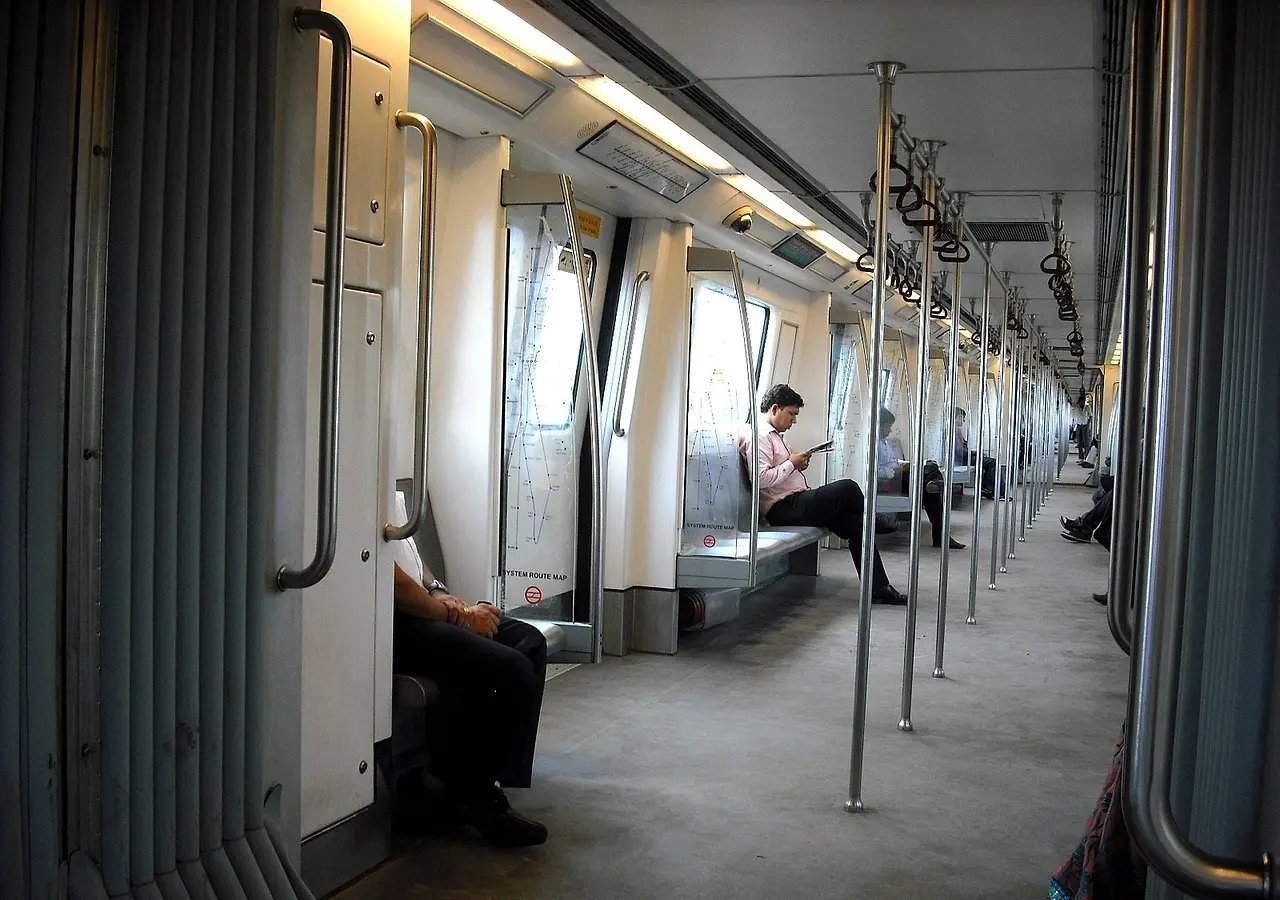
A 48‑year‑old man died after being slapped and pushed in a dispute over a senior‑citizen seat on a Delhi Metro train on October 8. The incident led to the arrest of a former IAS officer and his son, raising concerns about commuter safety, the conduct of public officials, and the legal response to violence in public spaces.
Что произошло с дискуссией о местах для пассажиров на Делийетрапе
Паван Шарма, 48-летний пассажир, сел в поезде на остановке метро Судебный в 8 октября. Он сел в купе для senior citizens, как указано на знаках внутри поезда.
Two men, identified in the FIR as Sanjay Pratap Singh and his son Sidharth Singh, confronted Sharma, claiming the seat was theirs. The confrontation quickly escalated.
Police say Sharma was slapped and pushed during the argument. The force of the push caused him to lose balance, fall onto the train floor, and sustain a head injury.
Metro staff responded by calling an ambulance and taking Sharma to Lok Nayak Jai Prakash Hospital. He was declared dead upon arrival, as recorded in the FIR.
The complaint was lodged by Sharma's mother, Durga Sharma, on October 9. The FIR cites Sections 105 (culpable homicide not amounting to murder) and 3(5) (common intention) of the Bharatiya Nyaya Sanhita.
Following the FIR registration, police arrested both accused men. Sanjay Pratap Singh is a former IAS officer; his son Sidharth Singh practices law at the Supreme Court.
Why it matters for public safety and trust
The death underscores how ordinary disputes in crowded public transport can turn deadly, affecting the sense of security among commuters.
- Regular commuters who rely on reserved seats for safety
- Senior citizens who expect priority seating to be respected
- Families of victims seeking timely justice
- Law‑enforcement agencies tasked with maintaining order on public systems
- Public officials whose personal conduct is under public scrutiny
When a high‑profile individual is involved, the case draws media attention, prompting broader debates about privilege, accountability, and the effectiveness of existing safety rules.
How we got here: background on seat reservation and legal process
India’s transport regulations mandate reserved seats for senior citizens, women, and differently‑abled passengers. These seats are marked with symbols and painted in distinct colours to signal priority.
If a passenger occupies a reserved seat without entitlement, other commuters are encouraged to politely request the seat be vacated. Persistent refusal can be reported to Metro staff, who may intervene.
When a complaint escalates to physical violence, the police intervene, register an FIR, and may arrest those suspected of causing harm. The Bharatiya Nyaya Sanhita provides specific sections for offences that result in death, such as culpable homicide.
In this case, the FIR’s use of Section 105 indicates that the police consider the act serious but not pre‑meditated murder. Section 3(5) points to a shared intent among the accused during the altercation.
What happens next in the investigation
The legal process will move through several stages, each monitored by the courts and the public.
- The arrested men will appear before a magistrate, where bail may be granted or denied based on the severity of the charges.
- A forensic team will complete a post‑mortem report to confirm the cause of death and any contributing factors.
- The investigation file will be forwarded to the appropriate court for trial under the cited sections of the BNS.
- Metro authorities may review and tighten security protocols, such as increasing staff presence on trains and reinforcing the reservation system.
These steps will determine whether additional charges are filed and what corrective measures are recommended for the Metro system.
Ключевые факты на один взгляд
- Incident date: October 8 at the Supreme Court Metro station
- Victim: 48‑year‑old Pawan Sharma
- Accused: former IAS officer Sanjay Pratap Singh and his son Sidharth Singh
- Dispute centered on a senior‑citizen reserved seat
- Sharma suffered head injuries after being pushed and fell
- Arrests made after FIR registration on October 9
- Charges filed under Sections 105 and 3(5) of the Bharatiya Nyaya Sanhita
The case remains under active investigation, and further developments will depend on court proceedings and any policy changes by Delhi Metro authorities.
Read the news report this explainer is based on: Man dies after alleged assault over seat inside Delhi Metro; ex-IAS officer, son arrested.
Source: Ebenezer News Explainer Desk · Ebenezer News Explainer Desk. Published 12 Oct 2026, 06:15 am.