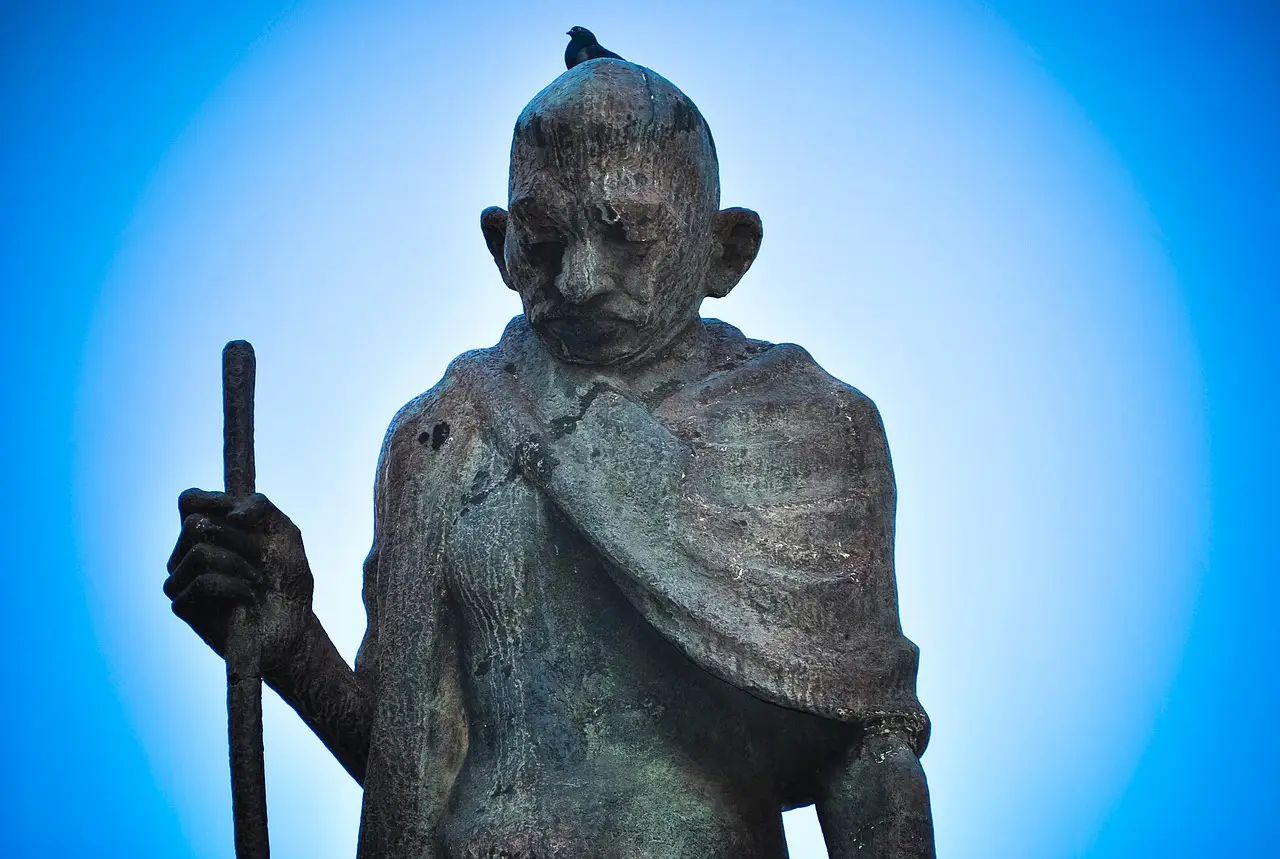
Mahatma Gandhi's 1922 Dissent StatementEchoes in Delhi Protests
Youth protesters demanding restraint and constitutional rights in Delhi have drawn parallels to Mahatma Gandhi's 1922 court statement on peaceful dissent amidst a security clampdown.
Ebenezer News Explainer DeskExplainers are written from our published summary and its cited sources, then checked against them.11 Oct 2026, 09:56 amUpdated 1h ago3 min readIndiaIndia
Mahatma Gandhi's 1922 Dissent Statement Echoes in Delhi Protests
Youth protesters in Delhi, who called for passive resistance amid a security build-up, have been detained. Their actions and demands for restraint and constitutional rights echo Mahatma Gandhi's 1922 court statement on confronting power through peaceful dissent.
Youth Protesters Detained in Delhi
Youth protesters were detained in the national capital. They had called for passive resistance. This occurred amidst a significant build-up of security forces.
The protesters were demanding the resignation of Chief Election Commissioner Gyanesh Kumar. They were also seeking restraint and constitutional rights. Their actions led to their detention.
Why Gandhi's Words Matter Now
Mahatma Gandhi's 1922 court statement on dissent is being recalled. This is happening as current protests in Delhi mirror aspects of his struggle against power. The protesters' demand for constitutional rights and peaceful resistance resonates with Gandhi's philosophy.
Gandhi's stance highlighted that affection cannot be manufactured or regulated by law. He asserted freedom to express disaffection without inciting violence. He also stressed that non-violence meant voluntary submission to penalties for non-co-operation.
These principles are fundamental to democratic expression. They underscore the right to voice grievances peacefully, even against state power.
The right to free speech and expression.
The right to association and peaceful assembly.
The right to air grievances through peaceful protest.
How We Got Here
Mahatma Gandhi made his statement in a colonial court on March 18, 1922. He was on trial for articles published in his journal, ‘Young India’. He and his editor pleaded guilty and received a six-month sentence.
Gandhi's statement came during a sedition trial. He was defending the right to express dissent. He distinguished between non-violent non-co-operation and violent actions.
In post-Independence India, the Supreme Court has upheld the spirit of Gandhi's dissent. Article 19 of the Constitution enshrines rights to free speech, expression, association, and peaceful assembly.
The Supreme Court has affirmed that public streets are natural venues for expressing opinions. While reasonable restrictions for public order are permissible, arbitrary bans are not.
A 1972 Supreme Court judgment stated that the right to assemble could not be abridged except by reasonable restrictions after the Constitution's commencement.
In 2016, the Supreme Court reiterated that peaceful protest is a fundamental right. It recognised organised, non-violent protest marches as a key weapon in India's struggle for Independence.
What Happens Next
The current situation in Delhi involves detained protesters. Their detention raises questions about the balance between public order and fundamental rights.
Future actions may involve legal challenges to the detentions. These could be based on constitutional rights to peaceful assembly and expression.
Watch for any legal petitions filed by or on behalf of the detained protesters.
Observe how authorities respond to demands for restraint and constitutional rights.
Monitor any further statements from judicial bodies regarding protest rights.
Key facts at a glance
Youth protesters were detained in Delhi.
They called for passive resistance amid a security build-up.
Protesters demanded the resignation of Chief Election Commissioner Gyanesh Kumar.
Their actions echo Mahatma Gandhi's 1922 court statement on dissent.
Gandhi stated affection cannot be manufactured or regulated by law.
He asserted freedom to express disaffection without inciting violence.
The Indian Constitution enshrines rights to free speech and peaceful assembly.