Ebenezer News Explainer DeskExplainers are written from our published summary and its cited sources, then checked against them.11 Oct 2026, 04:25 amUpdated 2h ago4 min readIndiaIndia
Delhi crackdown sparks flash protests across the city
Police and paramilitary forces cracked down on a planned Jantar Mantar rally on Saturday, sealing central Delhi and detaining hundreds. The move pushed youth groups to hold flash protests at Safdarjung flyover, Dilli Haat, Raj Ghat and makeshift detention centres, raising concerns over civil liberties.
Flash protests erupt across Delhi
The unprecedented crackdown on protesters by Delhi Police and paramilitary forces prompted many youth organisations to shift their demonstrations on Saturday to other areas, including the Safdarjung flyover, Dilli Haat, Raj Ghat and various makeshift detention centres in north‑west Delhi.
The central part of the national capital was sealed with heavy police deployment and barricading while metro stations, schools, colleges and markets remained closed.
Announcements were broadcast from loudspeakers across central Delhi, invoking Section 163 of the Bharatiya Nagarik Suraksha Sanhita and urging citizens to follow police directions.
Why the crackdown matters to citizens
The aggressive police action affects several groups and raises broader questions about the right to peaceful assembly in India.
Youth organisations that planned the Jantar Mantar rally
Women and children who were detained in small groups
Students and university staff detained at Bawana
General public facing closures of schools, colleges and markets
Legal observers concerned about Section 163 BNSS enforcement
These impacts highlight how sudden security measures can curtail ordinary civic activities and amplify fears of excessive force.
Detention of at least 12 people on Raisina Road and the bundling of larger crowds of 100‑200 into buses illustrate the scale of the operation.
Police also reported injuries to their own officers while detaining protesters, adding another layer to the tension.
How the protests shifted locations
Jantar Mantar is traditionally the focal point for large‑scale dissent in Delhi, but police stopped groups of four or five and larger crowds of 100‑200 from reaching it.
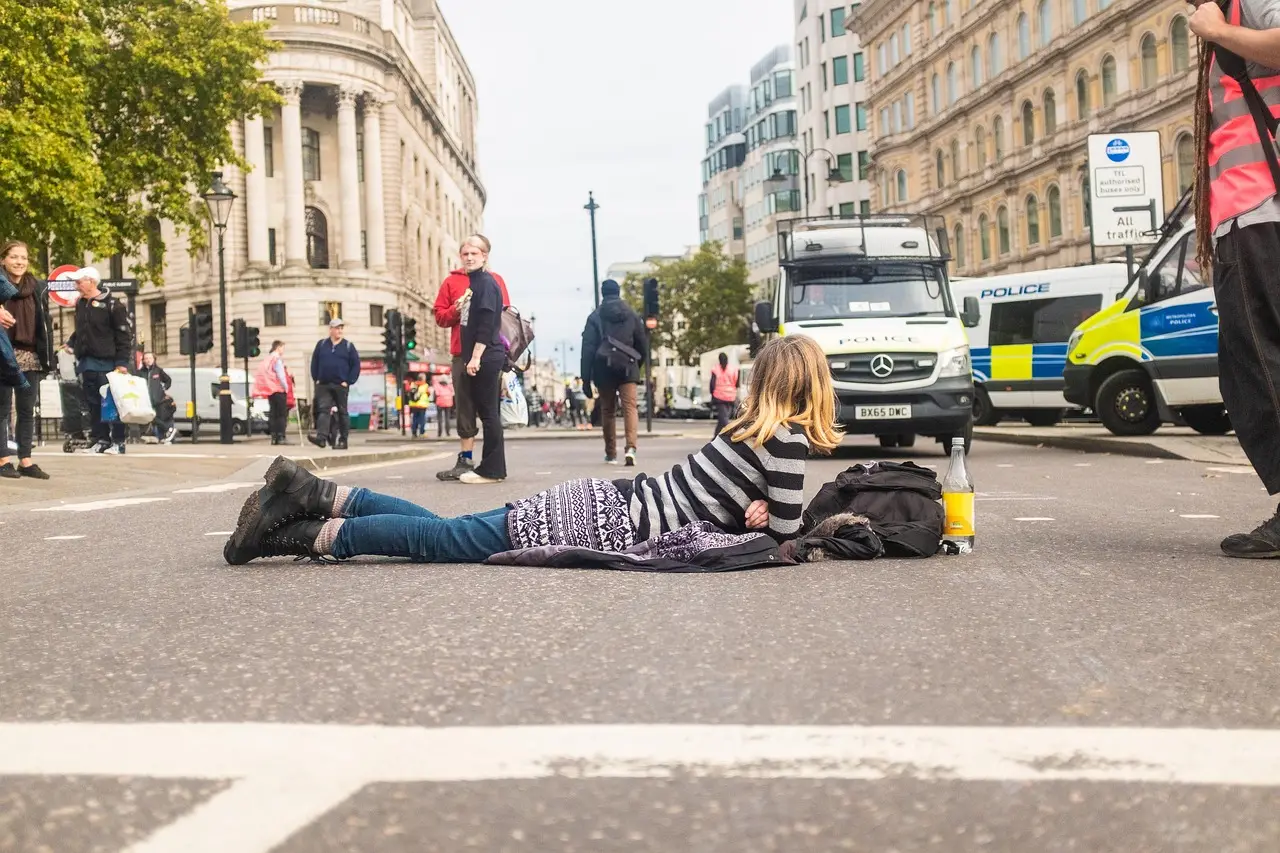
Protesters regrouped at Safdarjung flyover, where they tried to stop a bus of detainees. Some stood in front of the bus, others lay down on the road, and police used batons to push them away.
At Raj Ghat, over 150 people gathered under the banners of Disha Students’ Organisation, Naujawan Bharat Sabha and the Revolutionary Workers’ Party of India. After being detained, they were taken to Rajiv Gandhi Stadium in Bawana, more than 30 km from the original site.
Inside the bus and later at the stadium, detainees sang protest songs and discussed alleged irregularities by the Election Commission of India.
Students’ Federation of India members held a public lecture titled ‘India under undeclared Emergency’ at the Bawana detention centre, featuring a retired Jamia Millia Islamia professor who had also been detained.
What to watch in the coming days
The situation may evolve as authorities and demonstrators respond to the latest developments.
Legal challenges to the use of Section 163 BNSS in the crackdown.
Possible re‑deployment of police to other protest hotspots.
Statements from youth groups about future rally plans.
Reports of injuries or arrests among police and protesters.
Any court orders directing the release of detainees.
Monitoring these steps will show whether the protests regain momentum or remain fragmented across the city.
Key facts at a glance
The following points summarise the core details reported.
Police and paramilitary forces launched a crackdown on Saturday.
Central Delhi was sealed; metro stations, schools, colleges and markets stayed closed.
Announcements invoked Section 163 of the Bharatiya Nagarik Suraksha Sanhita.
At least 12 people were detained on Raisina Road and many more across the city.
Larger groups of 100‑200 were bundled into buses and taken to Bawana.
Protesters regrouped at Safdarjung flyover, Dilli Haat, Raj Ghat and makeshift detention centres.
Inside the buses and at Rajiv Gandhi Stadium, detainees sang protest songs and held a public lecture.
These facts provide a snapshot of the unfolding unrest and the authorities’ response.