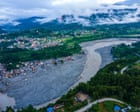
Whitley Bay, North Tyneside: A huge community effort is under way to clear up a spill of these disastrously resilient beads. We take a family trip to the beach to do our bit
This story summarizes reporting from The Guardian. Read the original for full context. Wire items stay in our news sitemap for seven days. Editorial policy.
Richard Smyth29 Aug 2026, 04:30 amUpdated 15h ago3 min readEnvironmentEnvironment
Environment — Richard Smyth
Country diary: We’re going on a nurdle hunt
My son spots the first one. It’s about the size of a lentil, and half-buried in the dry sand.
We’re on the beach at the seaside town of Whitley Bay. We’ve just walked past a clean-up crew of about 40 volunteers in hi-vis clothing and rubber gloves, kneeling or stooped over black buckets. This is the aftermath of the Tyne nurdle spill, which sounds much funnier than it is.
When I first read about the spill of plastic “nurdles” into the tidal Tyne at North Shields in July, I pictured something like foam packing peanuts, something that might wash up in big, soft drifts, and be gathered up in nets or by the armful. I was wrong.
Nurdles – used worldwide in the manufacture of all kinds of plastic products – are tiny, hard, resilient beads; when, on 19 July, a quayside gantry crane crashed on to the container ship BG Orange, around a billion of them – some 25 tonnes of nurdles – spilled from the ship’s containers. Now they’re everywhere.
My two children and I pick up about 70 in half an hour’s careful nurdle-hunting. At other spots, down the coast, up the coast, or at other times, other tides, we might have indeed gathered up handfuls. Nobody can be quite sure where they’re going to wash up, we can only be sure that they’re not going away. This is, realistically, a clean-up job without an endpoint.
My kids are better than I am at finding them in the sand and seaweed. But – and here’s the thing – birds are even better, and fish, in the open water where the nurdles are drifting free, better still. The marine food chain is already clogged with plastic, but the problem just got a billion nurdles worse. The Tyne Rivers Trust has already called the spill an “ environmental disaster ”.
Seabirds that wolf down nurdles (or fish that are full of nurdles) face starvation: “A stomach filled with plastic can’t be filled with food,” as an RSPB policy officer bluntly put it.
I watch a fulmar crossing the bay as my kids drop their nurdles into the volunteers’ buckets.
• Under the Changing Skies: The Best of the Guardian’s Country Diary, 2018-2024, is available now at guardianbookshop.com
We’re on the beach at the seaside town of Whitley Bay. We’ve just walked past a clean-up crew of about 40 volunteers in hi-vis clothing and rubber gloves, kneeling or stooped over black buckets. This is the aftermath of the Tyne nurdle spill, which sounds much funnier than it is.
This report is published with credit to The Guardian. Full available text from the wire is above. Read on The Guardian →
Source: The Guardian · Richard Smyth. Published 29 Aug 2026, 04:30 am.