As it is August, and everyone with stronger opinions is currently on holiday, last week I went on Any Questions? , the BBC Radio 4 panel show. I had prepared beforehand with a friend whose life’s work it is to make sure people don’t say anything stupid on the radio (or TV), and we’d talked about everything – the strait of Hormuz and energy prices; bus fare caps and the relative price of eggs; racism in the press and in public life; the AI bubble and the next financial crash; how many bathrooms Harry and Meghan currently have in the US, and whether a property even exists in the UK with that amount of toileting hardware.
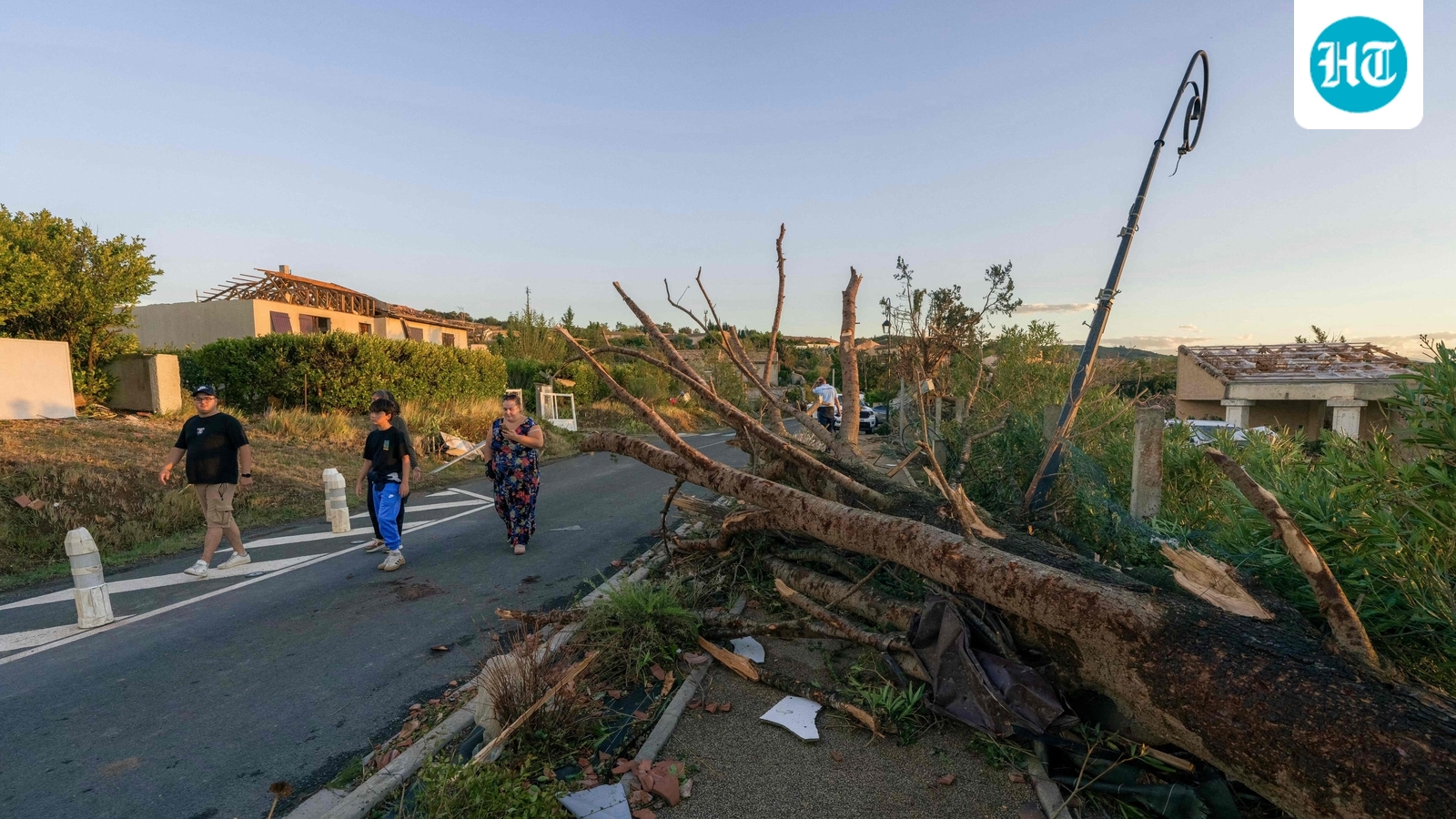
Predictably, perhaps, the audience’s questions did not spread themselves neatly across the full suite of current affairs, though Harry and Meghan’s return did come up – it was more a matter of which question about the climate crisis best represented the fact that everyone wanted to talk about the climate crisis. The news had just dropped that El Niño would deliver us an unprecedentedly wet autumn , but that was unlikely to soothe the parched earth of the record-breakingly hot, dry summer. Crops are failing, the land is on fire and nobody has not noticed.
The question that best caught the mood was: “Have we left it too late to avert the crisis?” I said there was no such thing as too late, channelling the economist Ann Pettifor, one of the architects of the original Green New Deal, back in the 00s, when it looked as if some politicians, at least, were in the market for ideas. She argued that we had to proceed as though there was still hope, because the alternative – grim nihilism – was no basis for a cooperative, generative body politic, and however many degrees of warming we were facing, we’d need one of those. Isabel Hardman from the Spectator said that it was already too late for some things, and not for others. Things weren’t looking good for birch trees in the south and east of England, for instance. It was a sombre but not bitter point of difference.
Then the Conservative MP, Nigel Huddleston, came in. When detached from the phrase “net zero”, he seems like a reasonable, personable guy. But they’re not allowed to detach. Conservatives are tribally required to say that transforming to a carbon-neutral future is too expensive at this time. Even while they can see the impact of fossil fuels all around them, even when sitting in front of 200 people who palpably believe that there is no such thing as too expensive, when the prize is a beautiful planet that you can live on, Tories have to hold the line.
The purge of the net zero believers from the Conservative party has a brute logic; Kemi Badenoch has chosen this as a red line, the signal difference between herself and the government. She can’t very well hold together a loose coalition between those who cleave to this pillar of new Conservatism and those who don’t. But when you take that position, which must have sounded solid in a strategy meeting, and perform it in front of normal people, who wake up every day to a rapidly changing climate, it sounds unhinged. All the standard lines, about how the UK accounts for only 1% of emissions globally, and that we should leave all the transformation and future-proofing to China, dissolve on contact with reality.
Someone in the audience gave the only sensible response, which was to make a timeless and highly legible gesture involving his hand and his head (I call it legible, there is some contention about whether it means “wanker” or “dickhead”). Obviously I started laughing because I’m only human, but he got told off by a member of the production team and I got a bit of a glare as well. It’s one thing to understand the exigencies of classic Westminster politics, it’s another to watch these rhetorical manoeuvres in real life, where they are too ridiculous to take seriously, but too serious to laugh off. For the climate, it may be too late and not too late; but we definitely don’t have time to carry on indulging this surrealism.
• Do you have an opinion on the issues raised in this article? If you would like to submit a response of up to 300 words by email to be considered for publication in our letters section, please click here
Predictably, perhaps, the audience’s questions did not spread themselves neatly across the full suite of current affairs, though Harry and Meghan’s return did come up – it was more a matter of which question about the climate crisis best represented the fact that everyone wanted to talk about the climate crisis. The news had just dropped that El Niño would deliver us an unprecedentedly wet autumn , but that was unlikely to soothe the parched earth of the record-breakingly hot, dry summer. Crops are failing, the land is on fire and nobody has not noticed.
This report is published with credit to The Guardian. Full available text from the wire is above. Read on The Guardian →
Source: The Guardian · Zoe Williams. Published 24 Aug 2026, 03:17 pm.